EN
EN


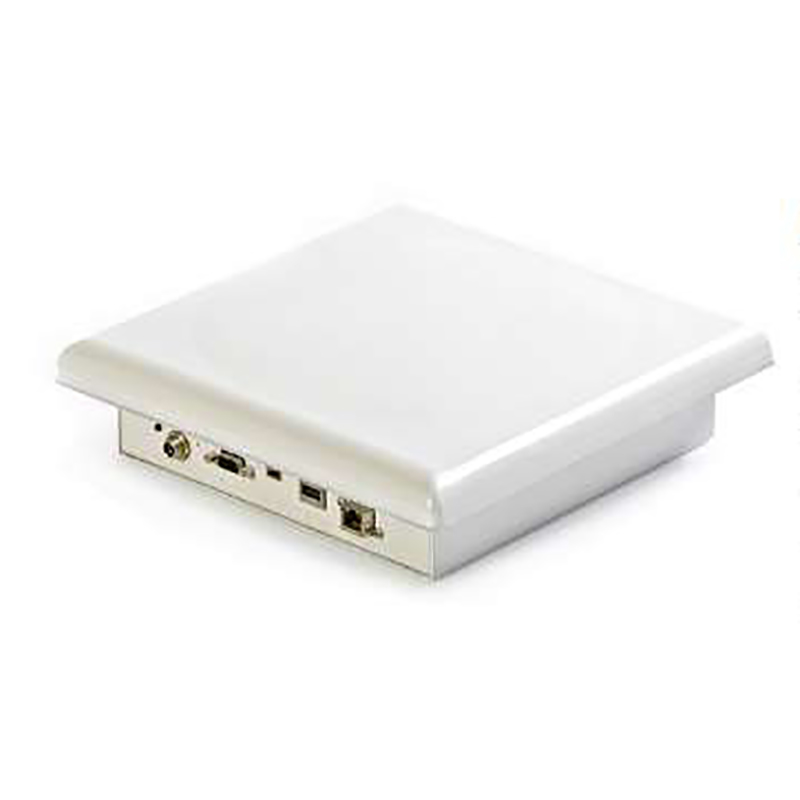
Astra-EX 2-Port Integrated UHF RAIN RFID Reader
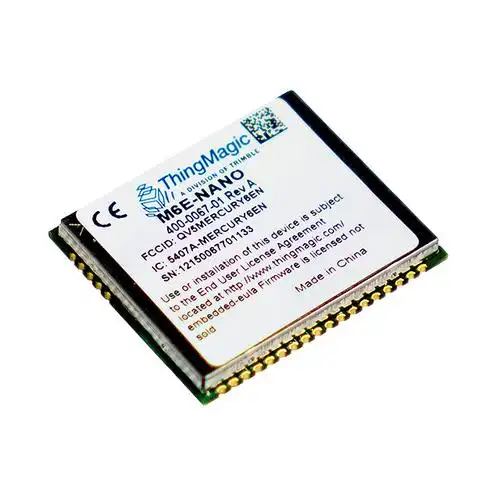
Driven by ThingMagic's powerful Mercury6e (MGe) UHF RFID Module, Astra-EX is an easy toinstall, unobtrusive, integrated 2-port RAIN reader/antenna designed for office and commercialenvironments. Power-over-Ethernet (PoE) and Wi-Fi options allow for flexible, low cost, singlecable installations. Astra-EX blends in well with corporate IT infrastructures and office layouts, and offers full support for ThingMagic's enterprise-class MercuryAPI software.
- Overview
- Specifications
- MAKING RFID EASY TO USE
- Recommended Products
Overview
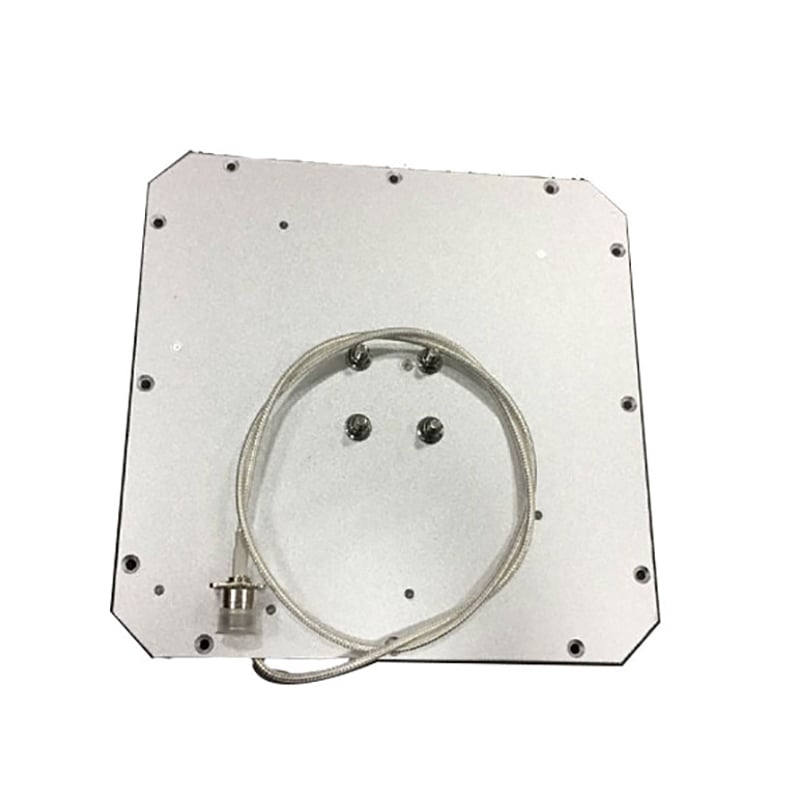
The Astra-EX integrated fixed RFID reader integrates the M6e ultra-high frequency RFID module and an 8.5dBi RFID circularly polarized antenna to become an integrated reader. It supports a second external RFID antenna through RP TNC and supports "anti-collision Dense Reader Mode (DRM)" and first. The advanced anti-interference function significantly reduces the out-of-channel noise generated by the reader in this mode. Therefore, it can support a large number of readers working simultaneously without reducing the reading rate. Astra-EX is an industrial-grade EPC, Gen2(ISO18000-6B and IP-X are optional), high-performance RFID reading and writing device.
Astra-EX offers Wi-Fi options to help enterprises integrate their existing Wi-Fi networks at a low cost. The Wi-Fi security standards that support enterprises include: TKIP, AES and EAP-TLS.
Astra-EX offers Ethernet (PoE) power supply mode, completely eliminating the requirement that cables and sockets must be close to each other. Supporting rapid installation and reduced wiring, the small size (10.2 "H x 10.2" W x 3 "D) makes Astra-EX easy to install in enterprises, commercial, industrial and supply chain management.
The Astra-EX is equipped with 32MB of flash memory and 64MB of DRAM for hosting applications
Astra-EX supports LLRP 1.0.1 and multi-protocol (IP-X) extensions.
Astra readers fully support the ThingMagic Mercury API embedded operating system and provide. The SDKS of NET and Java can easily customize interfaces, thereby enabling the necessary control over readers. Moreover, the Astra-EX reader features excellent network management and security characteristics, supports DHCP and firmware updates, and is compatible with the SSL/SH secure transmission protocol. It is an ideal choice for RFID reading and writing devices in commercial and industrial applications.
Specifications
| Tag/Transponder Protocols | |
| RFID Protocol Support |
EPCglobal Gen2 (ISO 18000-6C)with DRM ISO 18000-6B (optional) |
| UHF RFID Antenna Interface | |
|
Integrated Antenna External Interface RF Output Power RF Output Power Accuracy Frequency Range Per Region |
Integrated 8.5 dBiC antenna RP-TNC connector 5 dBm to 31.5 dBm (1.4 W) to externalport; up to +30 dBm (1W) to integratedantenna2 +/-0.5 dBm above +15 dBm FCC 902-928 MHz (Americas) ETSI 865.6-867.6 MHz (EU)TRAI865-867 MHz (India) ACMA 920-926 MHz (Australia) |
| Data/Control/Wireless Interfaces | |
|
Connectors Optional WiFi GPIO Indicators/Switches |
RJ45 (10/100 Base-T Ethernet) USB Type B (console port) USB Type A (accessory port) HD15 (GPIO interface) Screw-lock 5.45 mm plug with 2.5 mmcenter pin (DC input) RP-SMA (Optional WiFI Antenna) Internal 802.11 b/g WEP 40-bit and 104-bit keys; WPA& WPA2 with TKIP and AES algorithms (pre-shared keys or EAP-TLS) 4 opto-isolated inputs, 4 opto-isolatedoutputs, +5V source, ground reference Two color status LED, reset switch |
| Mercury OS Features | |
|
Networking Security Web-based Control |
Cisco-certified DHCP and DNS-basedconfiguration and firmwaremanagement, TCP/IP networking stack. SSL/SsH-based security Configuration, monitoring and reading from a web browser via HTTP or HTTPS |
| Application Interface | |
|
Direct Communication On-Reader API Host API |
EPCglobal Low Level Reader Protocol(LLRP) v 1.1 with multiprotocol andadvanced feature extensions CAPI Java, C or .NET API |
| Power | |
|
Power Over Ethernet External DC Power Optional Ac Adapter |
802.3af in both modes A and B(Supports 100m cable) 10- 30 VDC supply voltageMaximum DC power: 15 W 100-240 VDC, 1.5 A RMS max, 47-63 Hz |
| Physical | |
|
Dimensions Weight |
26.1 cm L x 26.1 cm W x 7.6 cm H(10.2 in Lx 10.2 in W x 3.0 in H) 4.5 lbs (2.0 kg) |
| Environment | |
|
Operating Temp. Storage Temp. Humidity |
-20 Ct0 +50C -40 C t0 +85 C 5% to 95%, non-condensing |
| Regulatory and Safety | |
|
Regulatory Other |
FCC 47 CFR Ch. 1 Part 15; Industrie Canada RSS-21 0 ETSI EN 302 208 v3.1.1 (RED 2014/53/EU) ROHS Compliant IEC 60950-1(ed.2) US-17669-UL |
| Architecture | |
|
Processor Operating System DRAM Memory Flash Momory |
Intel IXP420 Network Processor Linux kerel version 2.6 64 MB 22 MB |
| Performance | |
|
Max Tag Read Rate Max Read Distance |
More than 750 tags per second Over 30 feet (9m)with 9 dBIC or6 dBiL antenna |
| Ordering Information | |
| Astra-EX Reader with POE | |
|
North America Europe India Australla |
A6-NA-POE A6-EU-POE A6-IN-POE A6-AU-POE |
| Astra-EX Reader with Integrated WiFi* | |
|
North America India Australla |
A6-NA-WIFI A6-IN-WIFI A6-AU-WIFI |
| AC Indoor Power Adapter | |
|
North America Europe Australia |
PWRADP-M6-NA PWRADP-M6-EU PWRADP-M6-AU |
Requires AC Adapter.
Maximum power may have to be reduced to meet regulatory limits, whichspecify the combined effect of the module, antenna, cable, and enclosureshielding of the integrated product.
Measured in controlled test, field results may vary.
Specifications subject to change without notice.
MAKING RFID EASY TO USE
ThingMagic is dedicated to driving the barriers to deploy-ing RFID technology as low as possible. We design our products to be easy to use out of the box and to deliver predictable, reliable, and repeatable performance. Our development tools require little RFID expertise, enabling you to rapidly design, test, and deploy your RFID solutions.
Mercury APl
A common development platform, supporting an extensive variety of hardware to connect, configure, and control ThingMagic readers.
Universal Reader Assistant
A utility for advanced demo, testing, and tuning of all ThingMagic readers. Reduces complexity for novice users while permitting low-level control for advanced developers.